
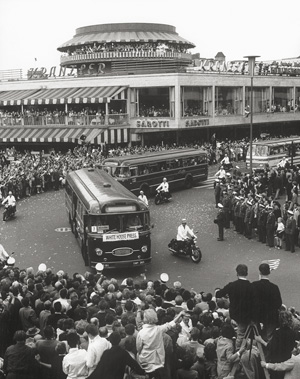
Jacoby, Max
Crowds lined up at Kranzlereck during John F. Kennedy's visit to Berlin
Los 4181
Schätzung
1.000€ (US$ 1,149)
Crowds lined up at Kranzlereck during John F. Kennedy's visit to Berlin. 1963. Vintage gelatin silver print on Agfa paper. 29,9 x 23,8 cm. Photographer's stamp and annotated as well as dated in pencil on the verso.
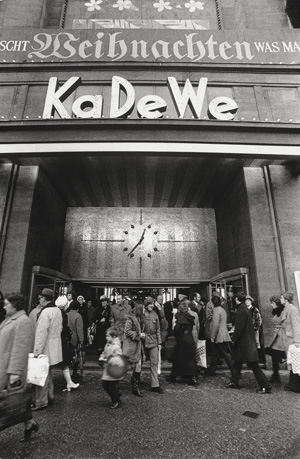
Kaufhaus des Westens (KaDeWe). Early 1970s. Vintage gelatin silver print on Agfa paper. 40 x 26,1 cm. Photographer's stamp on the verso.
Installed during the post-war reconstruction of Berlin's famous KaDeWe department store in the 1950s, the distinctive square clock above its main entrance became a familiar West Berlin landmark and a symbol of the Wirtschaftswunder (economic miracle). For decades, it served as a popular meeting point, giving rise to the familiar phrase "Let's meet under the clock at KaDeWe". The clock was eventually removed during a major renovation in the mid-1990s to make way for today’s modern glass facade.
Literatur: Angelika Gause, ed. Der Fotograf Max Jacoby: Bilder der 60er und 70er Jahre, Koblenz: Görres, 2003.
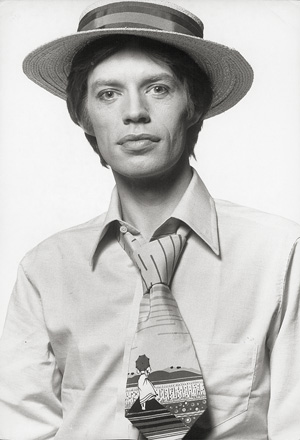
Photographers: Terry O'Neill (1938-2019) and Bob Whitaker (1939-2011). Mick Jagger. 1970, 1974. 2 vintage gelatin silver prints. 25 x 17,2 cm and 28,6 x 20,5 cm. Each with typed press text label and 2 agency stamps on the verso.
The portrait by Terry O'Neill was taken shortly before the release of The Rolling Stones album "It's Only Rock and Roll" in 1974. The photograph by Bob Whitaker shows Mick Jagger in the title role in the film Ned Kelly.
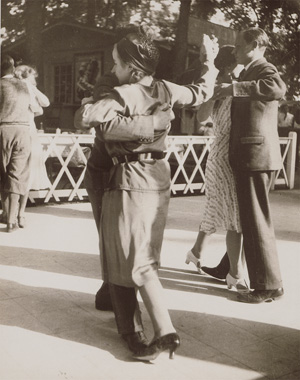
In der Freiluft-Tanzdiele; Tanz im Freien. Early 1930s. 2 vintage gelatin silver prints. 20,8 x 16,5 cm and 13 x 17,8 cm. Both with photographer's stamps and titled by the photographer in pencil on the verso.
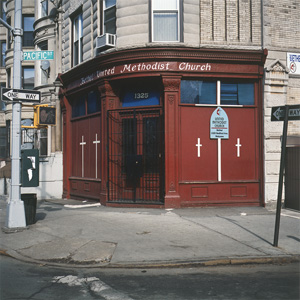
"New York Storefront Churches" portfolio. 2008. 24 chromogenic prints. Each circa 22,8 x 22,8 cm (sheet 35,3 x 27,8 cm). Each signed, editioned and dated by the photographer in black ink on the verso. Edition of 10 and 2 artist's proofs. Published in New York in 2012. With title page and list of titles with colophon, signed by the artist. Presented in original gray linen clamshell case with black-stamped title on the front cover (37,5 x 29,3 cm).
Charles Johnstone's work has been influenced by the American "New Topographics" photographers of the 1970s, whose restrained approach changed perceptions of the urban landscape, as well as by the conceptual artist Ed Ruscha. He has also long admired Luigi Ghirri, particularly for his use of color. On his walks through New York, Johnstone found inspiration in the makeshift storefront churches he encountered, with their colorful, often worn facades. Bringing together an array of these churches, each with its own distinct character, the portfolio records a distinctive and potentially disappearing aspect of the city's religious and architectural landscape.
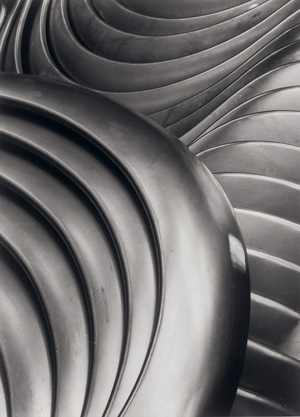
Peter Keetman. Portfolio Nr. 2 (Volkswagenwerk). 1951-53. 5 ferrotyped gelatin silver prints, printed 1984. Various sizes, circa 17 x 22 cm and 23,5 x 17,1 cm (sheet 23,8 x 30,8 cm) and reverse. Each signed by the photographer in black ink and editioned "6/50" on the verso. Presented in original black linen clamshell box with printed text sheet and embossed title on front cover. Edition CCD-Galerie, Düsseldorf 1984.
Peter Keetman’s 1951-53 series Volkswagenwerk offers a strikingly modernist view of the Volkswagen factory, transforming car parts and assembly lines into rhythmic, abstract compositions. Blending industrial subject matter with formal experimentation, the series exemplifies Keetman’s role in the postwar Fotoform movement and how he redefined the aesthetic potential of industrial photography.
Literatur: Holger Broeker, ed. Peter Keetman: Volkswagenwerk 1953. Bielefeld: Kerber, 2003, ill. pp. 23, 117, 121 and 137.
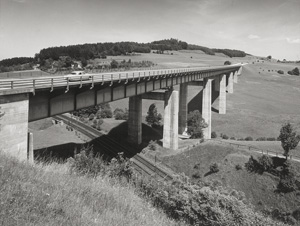
Autobahnbrücke bei Bergen (Mehn-Salzburg). 1950s. Vintage ferrotyped gelatin silver print on Leonar paper. 18,2 x 24 cm. Photographer's stamp and annotated in pencil on the verso.
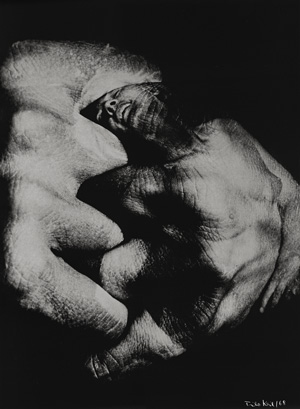
Umarmung (Embrace). 1968. Vintage half-tone print. 40,1 x 29,3 cm. Estate stamp on the verso.
A rediscovered figure in postwar German photography, Tilo Keil produced his distinctive body of work over a period of just three years. This unusual erotic montage belongs to his series "Hautbilder" (Skin Pictures), 18 works from which were exhibited at the Avant Art Galerie Casa in Munich in 1968.
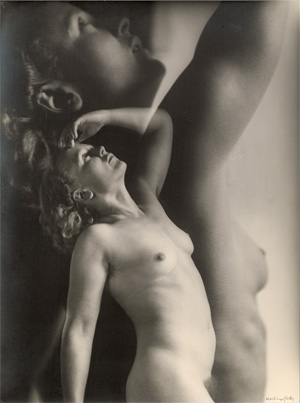
Female nude (double exposure). 1930s. Vintage gelatin silver print on Agfa-Brovira paper. 23,9 x 17,8 cm. Signed by the photographer in pencil in lower right corner; photographer's "Kestingfoto, Dresden A 24, Mommsenstr. 5 Ruf 46425" stamp on the verso.
The German photographer, painter and professor Edmund Kesting is associated with Expressionism and New Vision photography, his work bridges avant-garde experimentation and formal abstraction. From the 1920s onwards, he employed techniques such as multiple exposure, photograms and solarisation to create dynamic portraits, nudes and abstract compositions.
Kesting, Edmund
Portrait of the art dealer Ludwig Gutbier
Los 4190
Schätzung
800€ (US$ 920)
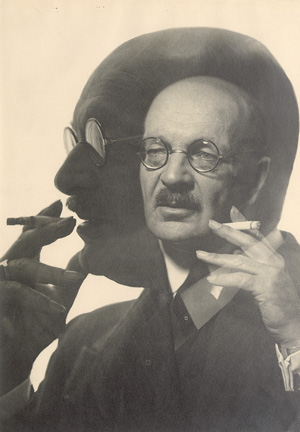
Portrait of the art dealer Ludwig Wilhelm Gutbier (1873-1951). 1934. Vintage large-format gelatin silver print (double exposure). 40,5 x 29 cm. Signed and annotated "Foto-Komposition" by the photographer in ink in the lower margin; photographer's copyright stamp and further annotations in ink and pencil on the verso. Hinge-mounted in mat.
In 1893, Ludwig Wilhelm Gutbier succeeded his father, Adolf Ludwig Gutbier, as director of the Ernst Arnold Gallery in Dresden, which became one of Germany's leading galleries for modern art in the early 20th century. He organized a major exhibition of Impressionist art in 1899 and a presentation of works by artists of the Brücke group in 1910. Under his leadership, the Ernst Arnold publishing house was established in 1919, alongside a collection of graphic art. Following the gallery's closure due to financial difficulties in 1934, Gutbier reopened it in Munich in 1937, establishing business relationships with leading figures of the Nazi regime. The gallery was destroyed in 1944, and after the war, the American occupying forces confiscated his property and prohibited him from trading.
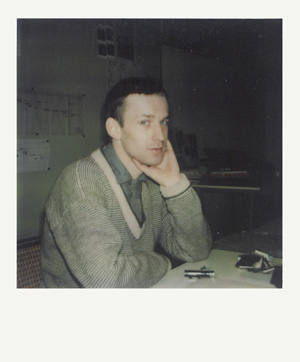
Photographer: Peter Preller (b. 1940). Martin Kippenberger, Hamburg. 1973-74. 6 unique polaroid color prints. 11 x 9 cm.
Made during Kippenberger's studies at the Hamburg Academy of Fine Arts, these Polaroids show the young artist at Peter Preller's interior design studio. One depicts him with the artist Ina Barfuss, another in front of a collaborative work by Barfuss and Thomas Wachweger, and a third with Ursula Sudeck, an editor of Schöner Wohnen.The images offer an early record of Kippenberger before his move to Berlin in 1978, where he co-founded "Kippenbergers Büro" with Gisela Capitain and became involved in the music and performance venue SO36. His later work, associated with the "Neue Wilde", is known for its irreverent wit and critical engagement with artistic and social conventions.
Klemm, Barbara
Fall der Mauer, Berlin, 10. November 1989
Los 4192
Schätzung
900€ (US$ 1,034)
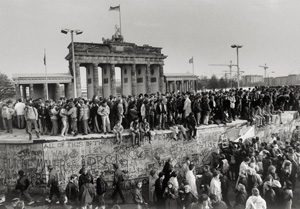
Fall der Mauer, Berlin, 10. November 1989. Gelatin silver print, printed later. 19 x 27 cm (sheet 23,7 x 30,4 cm). Titled by the photographer in ink in the lower margin.
A leading German photojournalist, Barbara Klemm documented the political and social history of a divided Germany with a distinctive, observant eye. Taken the day after the opening of the Berlin Wall, this photograph records a pivotal moment in the peaceful transition that led to German reunification.
Literatur: Volker Rattemeyer, Mart Ehrich and Barbara Klemm. Mauerfall, 1989. Wädenswil: Nimbus, 2011, illustrated.
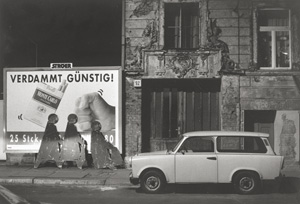
Berlin Mitte, 1992. Gelatin silver print, printed later. 19,3 x 28 cm (23,8 x 30,4 cm). Signed and titled in ink by the photographer in lower margin.
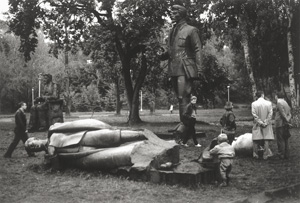
Abgestellte Vergangenheit, Moskau, 1991. Gelatin silver print, printed later. 19,3 x 28 cm (23,8 x 30,4 cm). Signed and titled in ink by the photographer in lower margin.
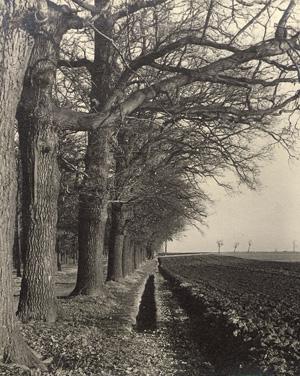
Tree-lined country road. 1929-32. Vintage gelatin silver print. 20,5 x 16,5 cm. Photographer’s “Foto H. Koch Halle/S” and estate stamp on the verso.
Heinrich Koch studied mural painting at the Bauhaus in Weimar and Dessau from 1922-1928 before working as an interior designer in Halle an der Saale until 1929. In 1930, he began studying photography under Hans Finsler at Burg Giebichenstein, subsequently becoming his assistant and succeeding him in 1932. Following the closure of the photography class by the National Socialists in 1933, Koch emigrated to Prague, where he died in a car accident in 1934.
Literatur: T. O. Immisch and Gunnar Lüsch, eds. Heinrich Koch: Photographien (1929-1934). Halle: Mitteldeutscher Verlag, 2002.
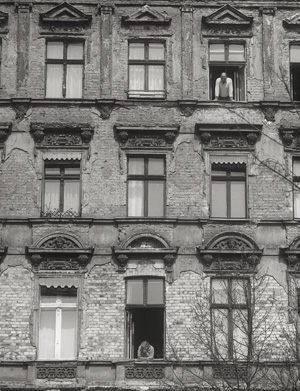
Kreuzberg, Berlin. 1974. Vintage ferrotyped large-format gelatin silver print on Agfa paper. 40,2 x 30,7 cm. Signed and dated by the photographer in pencil on the verso.
Dieter Kramer moved to Kreuzberg in 1968 and documented the district and its inhabitants over the following decades. His photographs trace its transformation from a working-class neighbourhood on the edge of West Berlin into a centre of protest, squatting and alternative culture.
Literatur: Dieter Kramer. Kreuzberg 1968-2013. Abbruch, Aufbruch, Umbruch. Berlin: Nicolai Verlag, 2013.
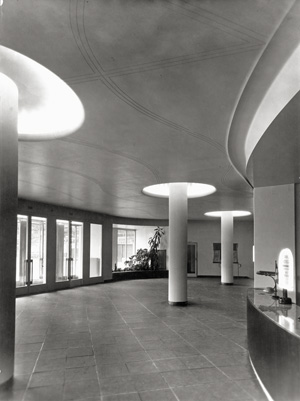
Maison de France, Berlin. Ca. 1950. Vintage gelantin silver print on Afga-Brovira paper. 39,7 x 29,8 cm. Photographer's blind stamp in lower left corner.
Alongside Arthur Köster and Emil Leitner, Max Krajewsky was among the leading architectural photographers working in Berlin. His extensive body of work combines technical precision with a keen sense of architectural form, providing an important record of the city's changing built environment. The Maison de France, opened in 1950 as a centre for Franco-German cultural exchange, was among the early postwar reconstructions on the Kurfürstendamm.
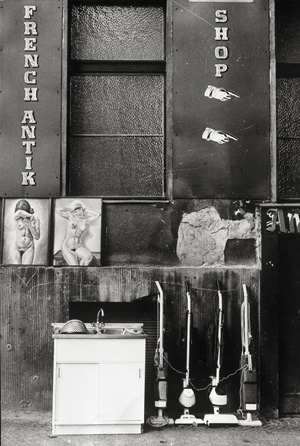
Kreuzberg, Berlin 1980s. 2 vintage gelatin silver prints. 39,8 x 26,7 cm and 30 x 40 cm. Each signed by the photographer in pencil and 1 also with photographer's stamp on the verso.
Wolfgang Krolow's photographs of Berlin are a visual chronicle of the city's ever-evolving identity and history. With a keen eye for capturing urban life, Krolow's images offer a compelling glimpse into its streets, architecture, and the people who inhabit them. His work often combines elements of documentary and street photography, portraying the city's rich cultural tapestry.
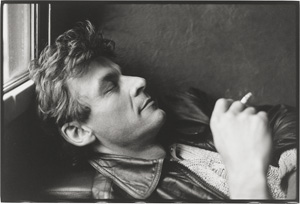
Krolow, Wolfgang
Portraits of the photographer Wolfgang Krolow
Los 4199
Schätzung
500€ (US$ 575)
Photographers: Ernst Volland and Peter Hebler. Portraits of the photographer Wolfgang Krolow. 1984/85. 2 gelatin silver prints, printed later. 40,3 x 30,4 cm and 18 x 23,9 cm. Each signed and titled by the photographer in pencil as well as with photographer's stamp on the verso, 1 also dated.
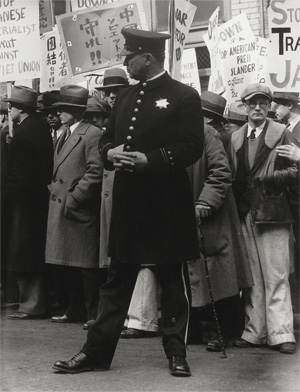
General Strike, San Francisco. 1934. Gelatin silver print, printed early 1970s. 34,2 x 26,5 cm (sheet 35,5 x 27,8 cm). Photographer's "1163 Euclid Avenue Berkeley, California" stamp and number in pencil on verso.
During the Great Depression, Lange turned from studio portraiture to photographing the social and economic hardship she encountered on the streets of San Francisco. Her images of breadlines and labour demonstrations established the direct, socially engaged approach that would define her documentary work. This photograph of the 1934 General Strike combines a strong sense of composition with close attention to the people and tensions surrounding the labour movement.That year, economist Paul Taylor, who later became Lange's second husband, used another of her photographs to illustrate an article on the strike in Survey Graphic. It marked the beginning of their professional and personal relationship.
Literatur: Robert Coles. Dorothea Lange: Photographs of a Lifetime. New York: Aperture 1982, ill. p. 47.
Therese Thau Heyman, Sandra S. Phillips and John Szarkowski. Dorothea Lange: American Photographs. San Francisco: SFMOMA, 1994, ill. pl. 10.
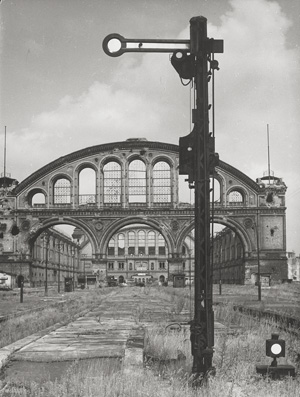
Anhalter Bahnhof, Berlin. 1957. Vintage ferrotyped gelatin silver print on Agfa-Brovira paper. 23,1 x 17,5 cm. 2 photographer's/copyright stamps and annotated as well as dated in pencil on the verso.
The German photojournalist Klaus Lehnartz was known for his perceptive and wide-ranging documentation of postwar society. His work spans political events, street life, and cultural moments, with a particular focus on Berlin during the period of German division. Through a clear visual language and keen observational eye, Lehnartz captured the shifting identity of the city and its people at a pivotal time in history.
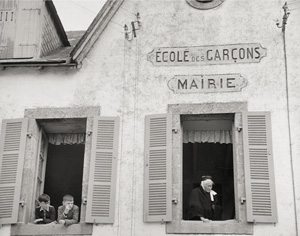
Ecole des Garcons Mairie, France. 1950s. Vintage ferrotyped gelatin silver print on doubleweight Agfa-Brovira paper. 23,2 x 29,6 cm. Photographer's estate stamp and annotated in pencil on the verso.
The German photographer Herbert List was a major figure in 20th-century photography, known for his refined visual language that combined classical aesthetics with the modernist sensibilities of his time. Deeply influenced by his background in art history and his exposure to Surrealism and the Bauhaus movement, List created images that often imbued everyday subjects with a dreamlike or metaphysical quality. His work spans still lifes, architectural studies, and portraits - many of which reflect a quiet, contemplative mood, displaying a fascination with form, light and shadow.
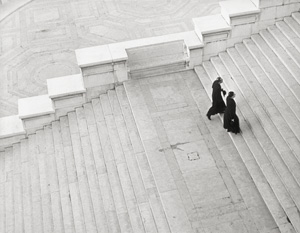
Stairs, Victor Emmanuel Monument, Rome. Early 1950s. Vintage ferrotyped gelatin silver print on doubleweight Agfa-Brovira paper. 22,3 x 28,8 cm. Photographer's agency stamp, typed paper title label and annotated in pencil on the verso.
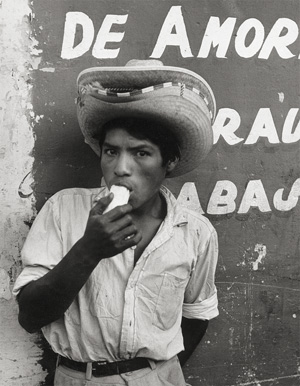
Auf dem Markt von Tenejapa, Mexico. 1958. Vintage gelatin silver print on doubleweight Agfa-Brovira paper. 22,3 x 28,8 cm. 2 photographer's stamps and annotated in pencil on the verso.
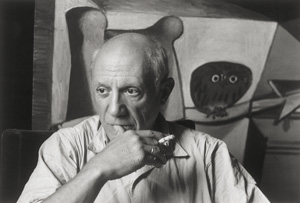
Pablo Picasso, Paris. 1948. Gelatin silver print, printed in 1981. 23,3 x 34,5 cm (sheet 30,3 x 40,5 cm). Photographer's estate stamp and signed by Max Scheler in ink on verso.
Literatur: Max Scheler and Matthias Harder, eds. Herbert List. The Monograph. Munich 2000, ill. p. 205 (image from the same sitting).
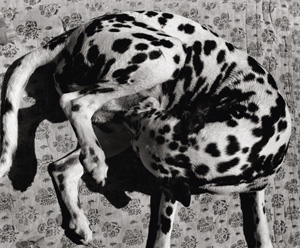
Nero, Portofino. 1937. Vintage ferrotyped gelatin silver print. 10,4 x 12,6 cm. Titled and dated in pencil, possibly in the photographer's hand; Black Star Agency, New York credit stamp and cropped annotations in ink on verso.
Literatur: Günter Metken. Herbert List: Fotografien 1930-1970. Munich: 1976, ill. Nr. 22 (similar image dated 1936).
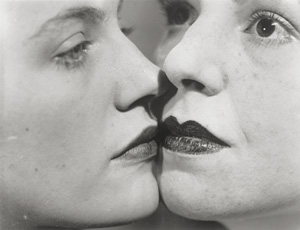
Le baiser (The Kiss). 1930. Gelatin silver print, printed by Pierre Gassmann in 1982. 23 x 30 cm (sheet 30,4 x 38,3 cm). Partial "Man Ray Paris" stamp, "Tirage original réalisé par Pierre Gassmann" stamp and "A.D.A.G.P Paris" copyright stamp on the verso.
A central figure of Dada and Surrealism, Man Ray expanded the expressive possibilities of photography through techniques such as solarization and his cameraless "rayographs". In Le baiser, he brings the faces of Lee Miller, his collaborator and fellow photographer, and an unidentified woman into a tightly framed composition that transforms an intimate gesture into a study of form and desire.
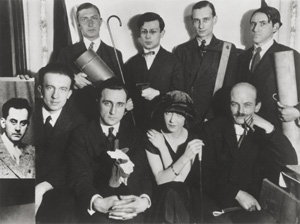
Rayographs; Portrait of the Paris Dada group. 1921-23. 3 gelatin silver prints, 2 on Agfa paper, printed in 1978 and 1991. The 2 rayograph prints mounted along the upper edge to grey board. 2 ca. 29,5 x 22,5 cm (mount 43 x 34 cm) and 19,8 x 26,5 cm (sheet 24 x 30 cm). Each with Griffelkunst edition stamp; the 2 rayograph prints also with Man Ray's signature stamp and rayograph stamp, as well as signed and dated in pencil by the estate executor on verso; Griffelkunst stamp on mount verso.
Man Ray made his original "rayographs" without a camera, arranging objects on light-sensitive paper and exposing them to light. Moving between abstraction and representation, these experimental images became an important part of his contribution to the Dada and Surrealist movements. The present group includes 2 later prints after rayographs, alongside a portrait of the Paris Dada group.
Literatur: Jean-Hubert Martin, ed. Man Ray: Photographs. London: Thames and Hudson, 1991, ill. pp. 140-141.
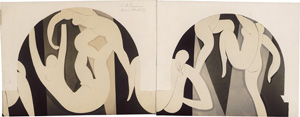
Matisse, Henri
Photographic reproduction of 2 panels of Matisse's triptych mural La danse de Merion
Los 4209
Schätzung
2.000€ (US$ 2,299)
Photographer: Wolfgang Vennemann (1908-1990). Photographic reproduction of 2 panels of Henri Matisse's mural La Danse de Merion. 1932/33. 2 vintage gelatin silver prints, joined together with linen tape on the verso. 16,8 x 43,8 cm. Left print dedicated to Hans Purrmann and signed by Henri Matisse in pencil in the upper right corner; each print with the photographer's stamp on the verso.
Commissioned by Albert C. Barnes in 1930, La Danse de Merion was designed for the three arches above the windows of the main gallery at the Barnes Foundation in Merion, Pennsylvania. Matisse worked on the monumental mural in his studio in Nice, developing its composition with coloured paper cut-outs before completing the final version in 1933. Its simplified forms and expressive use of colour anticipate the cut-outs that would become central to his later work.
Wolfgang Vennemann, son of the photographer Albert Vennemann, lived near Monte Carlo in the mid-1930s, where he photographed the work and surroundings of artists on the French Riviera. The present reproduction was dedicated by Matisse to the German painter Hans Purrmann, a former student of the artist. A related photographic reproduction of the complete mural can be seen in a 1948 photograph of Matisse's apartment.
Provenienz: From the estate of Hans Purrmann.
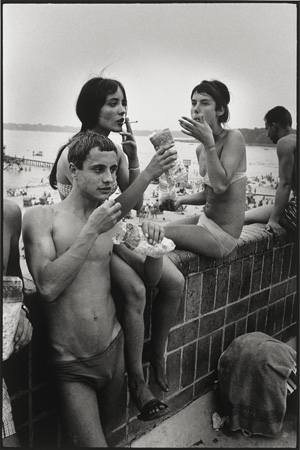
Freunde am Wannsee (Stöffie, Magda und Evi am Strandbad Wannsee mit Popcorn). 1959. Gelatin silver print, printed later. 37 x 24,5 cm (sheet 40,7 x 30,2 cm). Signed, titled, dated and dedicated by the photographer in pencil on the verso.
The American-German photographer Will McBride is celebrated for his candid and empathetic photographs of youth, sexuality and everyday life in postwar Germany. With an unguarded approach, he captured the changing attitudes and experiences of a younger generation. His compassionate eye and the trust he established with his subjects resulted in photographs that remain striking for their honesty, intimacy and emotional depth.
Literatur: Will Mc Bride. I, Will McBride. Cologne: Könemann, 1997, ill. p. 233.
[*]: Regelbesteuert gemäß Auktionsbedingungen. [^]: Ausgleich von Einfuhr-Umsatzsteuer.
* Alle Angaben inkl. 25% Regelaufgeld ohne MwSt. und ohne Gewähr – Irrtum vorbehalten.
Galerie Bassenge
Erdener Str. 5A
14193 Berlin
Öffnungszeiten:
Montag bis Donnerstag, 10–18 Uhr,
Freitag, 10–16 Uhr
Telefon: +49 30 8938029-0
Fax: +49 30 8918025
E-Mail: info (at) bassenge.com
Impressum
Datenschutzerklärung
© 2026 Galerie Gerda Bassenge
Galerie Bassenge
Erdener Str. 5A
14193 Berlin
Öffnungszeiten:
Montag bis Donnerstag, 10–18 Uhr,
Freitag, 10–16 Uhr
Telefon: +49 30 8938029-0
Fax: +49 30 8918025
E-Mail: info (at) bassenge.com
Impressum
Datenschutzerklärung
© 2026 Galerie Gerda Bassenge