
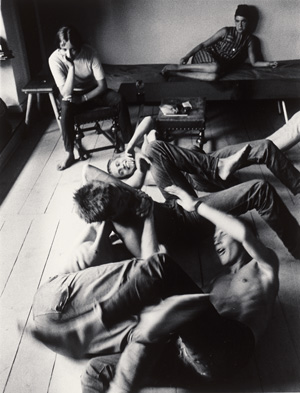
McBride, Will
Freunde raufen in Jan's Zimmer, Berlin Zehlendorf West
Los 4211
Schätzung
1.200€ (US$ 1,379)
Freunde raufen in Jan's Zimmer, Berlin Zehlendorf West. 1959. Gelatin silver print, printed 2012. 46,5 x 35,5 cm (sheet 61 x 50,2 cm). Signed, titled, dated and dedicated by the photographer in pencil on the verso.
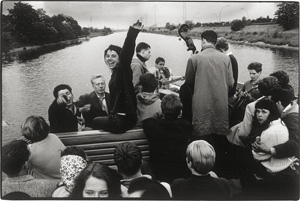
Riverboat, Berlin. 1959. Gelatin silver print, printed later. 18,5 x 27,8 cm (sheet 23,7 x 30,4 cm). Signed, titled, dated and annotated "Mein Lieblings Bild" by the photographer in pencil on the verso.
Literatur: Will Mc Bride. I, Will McBride. Cologne: Könemann, 1997, ill. pp. 122-123.
McDarrah, Fred W.
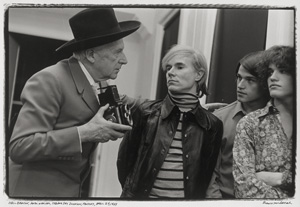
Cecil Beaton, Andy Warhol, Jeb and Jay Johnson, Factory, April 24, 1969
Los 4213
Schätzung
2.500€ (US$ 2,874)
Cecil Beaton, Andy Warhol, Jeb and Jay Johnson, Factory, April 24, 1969. Gelatin silver print, printed 1992. 31,5 x 46,5 cm (sheet 40,2 x 50,5 cm). Titled, dated and signed by the photographer in ink in the lower margin; photographer's copyright stamp, therein dated 1992, on the verso.
A photographer for The Village Voice, Fred W. McDarrah was one of the foremost chroniclers of New York's avant-garde. His photographs of Andy Warhol, the Beat Generation and the Fluxus movement are important visual records of the city's cultural life. This image captures the British photographer and designer Cecil Beaton visiting Warhol at his Factory, accompanied by Jeb and Jay Johnson.
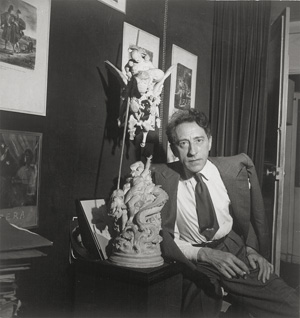
Jean Cocteau, Palais Royal, Paris. 1944. Vintage gelatin silver print, hinge-mounted in mat. 16 x 15,2 cm. Publisher's copyright stamp, date stamp, annotations in pencil and typed press text label on the verso.
The American photographer Lee Miller began her career as a fashion model in 1920s New York before moving to Paris, where she established herself as a fashion and fine-art photographer. During World War II, she worked as a war correspondent for Vogue, documenting the London Blitz, the liberation of Paris and the concentration camps at Buchenwald and Dachau. Once known primarily as Man Ray's muse and lover, Miller later gained recognition for her own artistic and documentary achievements, thanks in part to her son's efforts to preserve and promote her work. In this portrait, she captures the French writer and artist Jean Cocteau in his Paris apartment during the final years of the war.
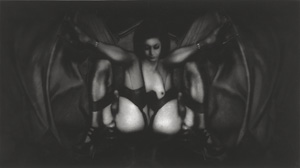
Photomontage. 1972. Vintage gelatin silver print. 16,3 x 23,7 cm. Signed, editioned “28/38” and dated by the photographer in pencil in the lower margin.
The French artist Pierre Molinier developed a distinctive photographic practice centred on desire, androgyny and the transformation of the body. Combining self-portraits with images of models and mannequins, he used photomontage to construct provocative, dreamlike compositions that challenged conventional notions of identity and sexuality. Beigegeben: 1 of 38 numbered (28/38) copies of the book Peter Gorsen and Pierre Molinier. Pierre Molinier; lui-meme. Essay über den surrealistischen Hermaphroditen. Munich: Rogner & Bernhard, 1972. In original silk slipcase (some tears). - Edges slightly rubbed, some scuff marks, otherwise in good condition.
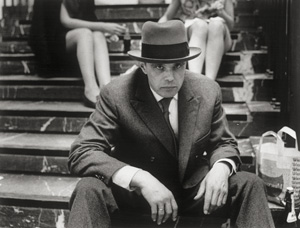
Joseph Beuys, Installation of the Ströher Collection, Neue Pinakothek, Munich. 1968. Gelatin silver print, printed later. 22,5 x 29 cm (sheet 23,5 x 30,5 cm). Signed, annotated and dated by the photographer in pencil and blue crayon, and photographer's stamp on the verso.
The German photographer Stefan Moses began his career in Breslau and worked as a theatre photographer in Weimar after World War II. From 1950, he was based in Munich and photographed for Stern magazine. His major series “Deutsche” and “Abschied und Anfang” offer a wide-ranging portrait of people in West and East Germany. He also photographed prominent cultural figures, including Thomas Mann, Erich Kästner, Theodor W. Adorno, Otto Dix, Max Frisch and Martin Mayer. This photograph shows Joseph Beuys at the installation of the Ströher Collection in Munich in 1968.
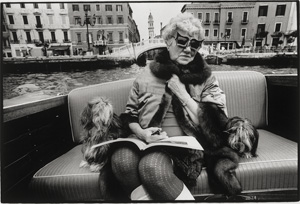
Peggy Guggenheim, Venice. 1969. Gelatin silver print, printed later. 25,5 x 38 cm (sheet 30,2 x 40,5 cm). Signed, titled and dated "1974" by the photographer in pencil and photographer's stamp on the verso.
Literatur: Ulrich Pohlmann, Matthias Harder, eds. Stefan Moses: Die Monografie. Fotografien 1947 bis heute. Munich: Schirmer/Mosel, 2002, ill. p.169 (variant)
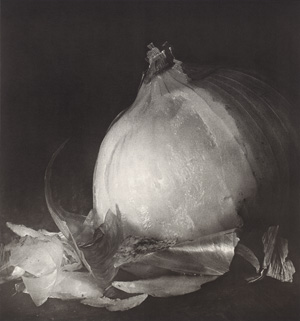
Cipolla da ... 1996. Large-format collotype, mounted in photo corners in mat. 40,5 x 39,7 cm (sheet 71,8 x 59,8 cm). Monogrammed, titled, dated and editioned "16/27" by the photographer in pencil in the lower margin.
Konrad R. Müller was an important German postwar portrait photographer. Over several decades, he photographed numerous politicians, as well as writers, musicians, actors and mountaineers. His landscapes and photo essays for publications including Süddeutsche Zeitung, Die Zeit, Stern, Profil, L'Express and Time, alongside the work offered here, reveal other facets of his photographic practice.
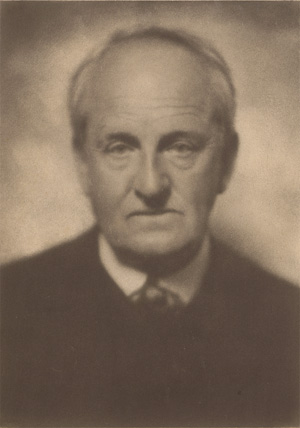
Portrait of Gerhart Hauptmann (1862-1946). Ca. 1922. Vintage bromoil print, mounted to board. 37,6 x 26,2 cm. Signed by the photographer in pencil and sitter's name handwritten in ink in the lower margin.
Alongside his work in film photography, Hans Natge produced numerous studio portraits of celebrities and figures from society. His early portraiture reflects an interest in Pictorialism and experimentation with pigment processes, lending his prints a distinctive painterly quality. This bromoil portrait depicts the German dramatist and novelist Gerhart Hauptmann.
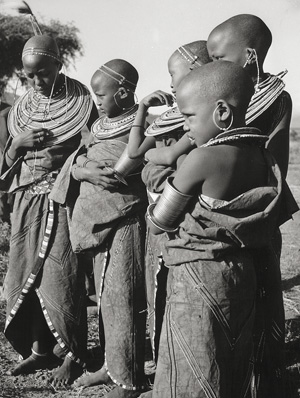
Group of Maasai girls. 1963. Vintage large-format ferrotyped gelatin silver print on Agfa paper. 39,8 x 30,3 cm. Signed by the photographer in pencil and photographer's production stamp on the verso.
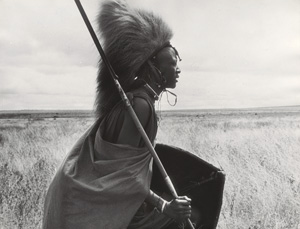
In the later part of her career, Leni Riefenstahl photographed extensively during her travels in Africa, including the Nuba communities of Sudan and the Maasai of Kenya and northern Tanzania. Her work features portraits alongside images of landscapes and customs. While admired for their aesthetic qualities, her photographs have also attracted criticism for their idealised portrayal of the people depicted, particularly in light of her earlier work for the Nazi regime. The present portrait belongs to her photographic work among the Maasai, whom she visited in 1963.
Riefenstahl, Leni
Maasai warrior on a lion hunt, Tanzania
Los 4221
Schätzung
1.000€ (US$ 1,149)
Maasai warrior on a lion hunt, Tanzania. 1963. Vintage, large-format, ferrotyped gelatin silver print on Agfa paper. 39,8 x 30,3 cm. Signed by the photographer in pencil and photographer's production stamp on the verso.
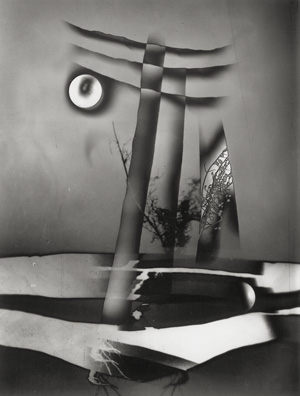
Selected images: Abstract photography. 1923-1961. 6 gelatin silver prints, printed 2009. Each ca. 24,5 x 18,5 cm (sheet 30,4 x 23,7 cm). Each with printed Griffelkunst edition text on the verso. Presented in the original half-canvas folder with illustrated text brochure.
Jaroslav Rössler studied under the photographer František Drtikol in Prague from 1917-1921 and later worked in his studio. In the late 1920s and early 1930s, he lived and worked in Paris. His experimental photography explored the interplay of light, shadow and abstract forms, as reflected in this selection of images spanning nearly four decades.
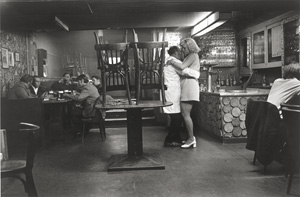
Ruetz, Michael
Sunday morning in the tavern "Sächsische Schweiz", Zwickau
Los 4223
Schätzung
750€ (US$ 862)
Sunday morning in the tavern "Sächsische Schweiz", Zwickau. 1974. Gelatin silver print, printed later. 16,5 x 24,5 cm (sheet 23,7 x 29,8 cm). Photographer's stamp and annotated in pencil on the verso.
Michael Ruetz was a prominent German photographer, journalist, author, and academic. He is widely recognized as one of the most active visual chroniclers of postwar Germany, notably capturing the iconic imagery of the 1968 West German student movement (APO). Over his multi-decade career, his creative focus shifted from fast-paced photojournalism to deep philosophical explorations of time, transience, and changing landscapes.
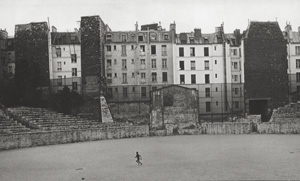
Paris V, Arènes de Lutèce. 1970s. Vintage gelatin silver print on Agfa paper. 17,2 x 28,7 cm. Photographer's stamp and titled by the photographer in pencil on the verso.
Michael Ruetz was a prominent German photographer, journalist, author and academic. He is widely recognised as a visual chronicler of postwar Germany, particularly for his images of the West German student movement of 1968. Over his career, his focus shifted from photojournalism to explorations of time, transience and changing landscapes.
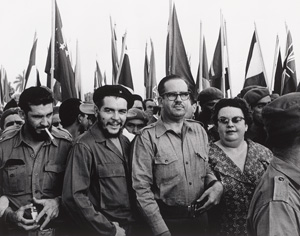
Salas, Osvaldo and Roberto
Che Guevara at 1st of May Parade / Che Guevara fishing
Los 4225
Schätzung
750€ (US$ 862)
Che Guevara at the May Day Parade / Che Guevara Fishing. 1960-63. 2 gelatin silver prints, printed later. Each circa 45 x 54,5 cm. Each titled, dated and signed by Roberto Salas in felt-tip pen, with the photographer’s “Salas/Habana Cuba” blindstamp in the lower margin.
Osvaldo and Roberto Salas were among the principal photographers to document the Cuban Revolution and its leading figures. Their photographs combine direct access with a clear photojournalistic style, recording both official ceremonies and more informal moments. The fishing image was made during the 1960 Hemingway International Fishing Tournament at Cojimar, an event attended by Guevara, Fidel Castro and Ernest Hemingway.
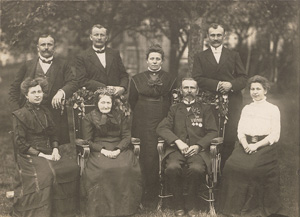
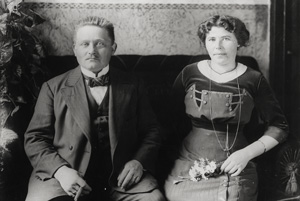
Portrait of a family in the Westerwald. Ca. 1910. Vintage matte gelatin silver print, mounted to original board. 11 x 15,3 cm. "August Sander Cöln-Lindenthal, Dürenerstr. 201" stamp in the lower right on the mount.
August Sander is celebrated for his portraits of people from across German society, assembled in his ambitious project "Menschen des 20. Jahrhunderts" (People of the 20th Century). His photographs of farmers and their families in the Westerwald formed an important part of this undertaking. Made around 1910, this family portrait belongs to the early body of work through which Sander documented the people of the region.
Provenienz: Wortelkamp Collection
Sander, August
Kleinstadtgastwirt Herdorf; Frühschoppen im Wartesaal
Los 4227
Schätzung
600€ (US$ 690)
Kleinstadtgastwirt Herdorf, 1913; Frühschoppen im Wartesaal, ca. 1926. 2 gelatin silver prints, 1 on Argenta paper, printed in the 1960s by Gunther Sander. 11,6 x 17,8 cm and 12,5 x 17,8 cm. Annotated by Gunther Sander in ink on the verso.
Literatur: Gunther Sander, ed. August Sander: Menschen ohne Maske, Luzern: C. J. Bucher, 1971, ill. unpaginated.
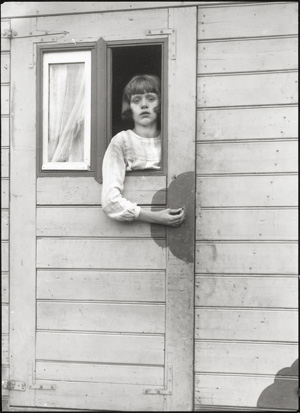
Mädchen im Kirmeswagen. 1926-1932. Gelatin silver print, printed 1990. 14,5 x 10,5 cm. "August Sander - Köln Lilienthal" embossed in the lower left corner; "Galerie Bodo Niemann" edition stamp, "August Sander Archiv" copyright stamp, dedication in pencil and editioned "13/30" in ink on the verso.
This image is part of August Sander's project "Menschen des 20. Jahrhunderts" (People of the 20th Century), group VI, "Die Großstadt" (The City), portfolio 37, "Fahrendes Volk - Jahrmarkt und Zirkus" (Travelling People - Fair and Circus). Beigegeben: Galerie Bodo Niemann exhibition invitation "August Sander: Antlitz der Zeit", 1990.
Literatur: Susanne Lange and Gabriele Conrath-Scholl, eds. August Sander. Menschen des 20. Jahrhunderts (study volume). Munich: Schirmer/Mosel, 2001, ill. p. 162 (cropped version).
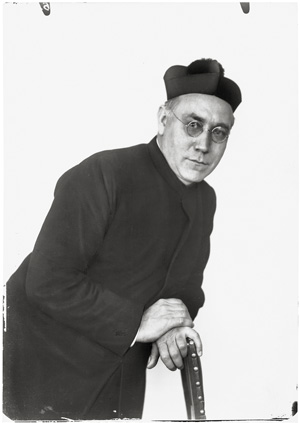
Katholischer Geistlicher (Pfarrer Haferkamp aus Köln). 1927. Ferrotyped gelatin silver print, printed in the 1960s by Gunther Sander. 30 x 21,7 cm. Annotated in ballpoint pen on the verso.
This portrait forms part of August Sander's project "Menschen des 20. Jahrhunderts" (People of the 20th Century), group IV, "Die Stände" (The Professions), portfolio 25, "Der Geistliche" (The Clergyman).
Literatur: Susanne Lange and Gabriele Conrath-Scholl, eds. August Sander. Menschen des 20. Jahrhunderts (study volume). Munich:Schirmer/Mosel, 2001, ill. p. 144.
Sander, August
Schulrektor mit seiner Familie; Jungbauern
Los 4230
Schätzung
500€ (US$ 575)
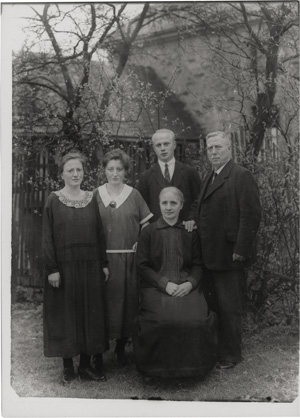
Schulrektor mit seiner Familie, ca. 1930; Jungbauern, 1922. 2 gelatin silver prints, printed by Gunther Sander 1960s. 18 x 12,9 cm and 11,7 x 17,4 cm. Each dated in ink and annotated on the verso.
"Schulrektor mit seiner Familie" is part of August Sander's project "Menschen des 20. Jahrhunderts" (People of the 20th Century), group I, "Der Bauer" (The Farmer), portfolio 6, "Der Kleinstädter" (The Small-town Dweller). A print of this image is in the collection of the Museum of Modern Art, New York.
Literatur: Susanne Lange and Gabriele Conrath-Scholl, eds. August Sander: Menschen des 20. Jahrhunderts (study volume). Munich:Schirmer/Mosel, 2001, ill. p. 116.
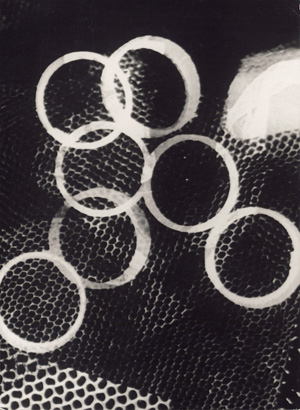
Schadographien 16, 17 and 25. 1960s. 3 vintage gelatin silver prints on Agfa Brovira paper. Ca. 16 x 11 cm, 17 x 9,5 cm and 10,5 x 8 cm. Each with typed title and annotated in pencil and ink on the verso, 1 also with typed label and 2 signed and dated by Bettina Schad in pencil on the verso.
Christian Schad first experimented with camera-less photography during his association with Dada in 1919, arranging everyday materials on light-sensitive paper to create abstract compositions. He returned to the technique in the 1960s, expanding the body of work known as "Schadographien".
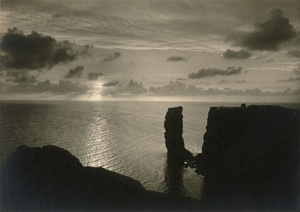
Views of Helgoland. Ca. 1912. 3 vintage gelatin silver prints, mounted to board. Each ca. 11,7 x 16,8 cm (mounts ca. 18 x 23,7 cm). Each signed by the photographer in pencil below the image on the mount; annotated in ink on the mount versos.
The German photographer Franz Schensky gained recognition for his photographs of Helgoland, often working in challenging weather conditions to document its dramatic coastline and the surrounding sea. These atmospheric views reflect his ability to capture the island's rugged beauty and the power of the water.
Schensky, Franz
Sea view with wave; Helgoland in rough seas
Los 4233
Schätzung
500€ (US$ 575)
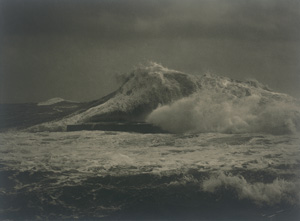
Sea view with wave; Helgoland in rough seas. Ca. 1910. 2 vintage green-toned carbon prints, each flush-mounted to board. Each 16 x 21,7 cm. Wave image with photographer's blind stamp in the lower right corner.
Richly toned and carefully composed, these atmospheric seascapes reflect Franz Schensky's early engagement with pictorial landscape photography. His treatment of sea and sky conveys both the force of the North Sea and the changing atmosphere around Helgoland.
Schensky, Franz
Sea view with sailboat and ship; View of Helgoland from the sea
Los 4234
Schätzung
400€ (US$ 460)
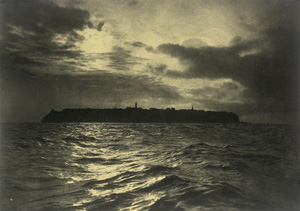
(Attributed to). Sea view with sailboat and ship; View of Helgoland from the sea. Circa 1910. 2 vintage toned carbon prints. Each 15,5 x 21,5 cm.
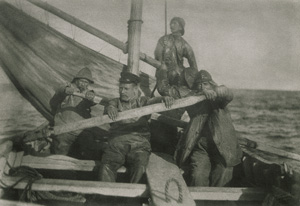
Fishermen at sea. Ca. 1910. Vintage carbon print. 26,5 x 38,5 cm. Photographer's blind stamp in the lower right corner.
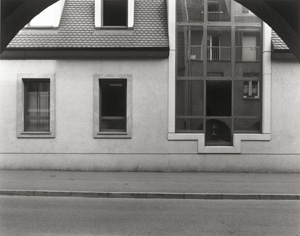
Images from the series "Irgendwo". 2001-2004. 3 vintage gelatin silver prints. Each ca. 17 x 21,5 cm (sheet 23,5 x 30 cm). One signed and dedicated in black felt-tip pen in the lower margin; each signed and annotated by the photographer in pencil on the verso.
Michael Schmidt was a leading figure in German documentary photography, known for his restrained and perceptive studies of urban life and the built environment. In 1976, he founded the "Werkstatt für Photographie" in Berlin-Kreuzberg, an important forum for contemporary photography. His sustained engagement with Berlin's postwar urban landscape established him as one of the most influential German photographers of his generation. In his series "Irgendwo", he turned his attention beyond Berlin to everyday life and places across Germany. Beigegeben: A copy of the book Michael Schmidt. Irgendwo. Cologne: Snoeck, 2005. Signed, dedicated and with drawing by M. Schmidt in pencil on title page. - Spine of dust jacket slightly time-stained, otherwise in very good condition.
Literatur: Michael Schmidt. Irgendwo. Cologne: Snoeck, 2005, ill. pp. 15, 99 and 111.
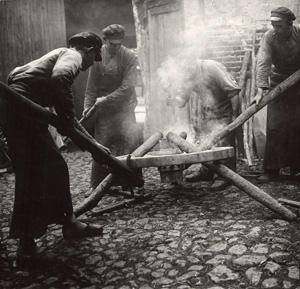
Metal workers. Mid-1930s. Vintage ferrotyped gelatin silver print. 16,8 x 17,5 cm. Photographer's stamp, archive stamps and typed paper label on the verso.
Eberhard Schrammen was among the first students at the Bauhaus in 1919, initially studying architecture. That year, he published the first issue of the Bauhaus magazine Der Austausch, featuring his own woodcuts. From 1921, he studied under Lyonel Feininger in the print workshop and attended Lothar Schreyer's stage design workshop. After the Bauhaus relocated to Dessau, Schrammen moved to the Gildenhall artists' colony, where he established a woodcraft workshop and joined the Deutscher Werkbund. He closed the workshop following the onset of the Great Depression in 1929 and turned to photography. After moving to Lübeck-Siems in 1933, he produced photographic series for Mauritius-Verlag and Lindenverlag, including the work represented by this photograph.
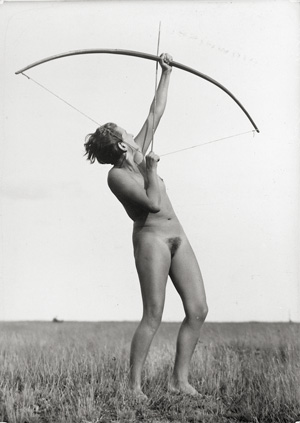
Ilka Dieball as "Diana". Ca. 1928. Vintage ferrotyped gelatin silver print. 18,2 x 12,9 cm. Photographer's "Kaiserplatz 16" stamp on the verso.
Published several times in physical education magazines of the period, this portrait depicts Ilka Dieball, a dance and gymnastics teacher and the first wife of naturism pioneer Adolf Koch (1897-1970). Together with Koch and Hans Graaz, she helped direct his Berlin school of physical culture. Following the National Socialist crackdown on the nudist movement in 1933, the school and its grounds were confiscated, Koch's books were burned and he was prohibited from teaching. In 1935, he established an institute in Kreuzberg, where the work continued on a smaller scale; Dieball later ran it during his wartime absence. As Ilka Falkenhagen, she taught gymnastics at the Spandau adult education centre into old age.
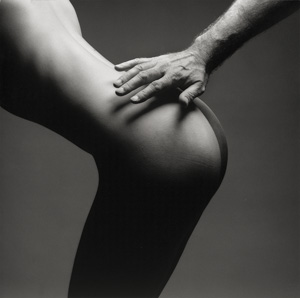
Hommage à Brancusi, Paris. 1969. Gelatin silver print, printed 1979. 30 x 30,3 cm (sheet 39,8 x 30,3 cm). Signed and dated by the photographer in pencil and photographer's stamp on the verso.
Jeanloup Sieff studied photography in Paris and Vevey before beginning his career as a freelance photojournalist. He joined Magnum in 1958 and later worked in New York for magazines including Esquire, Glamour, Vogue and Harper's Bazaar. His wide-ranging work encompassed fashion, portraiture, reportage, landscapes and nudes, distinguished by an elegant, often sensuous approach to form. Hommage à Brancusi reflects his interest in the sculptural qualities of the human body.
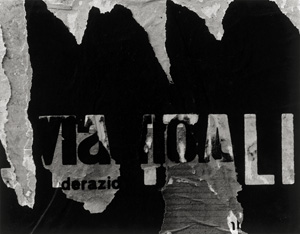
Rome 49. 1963. Gelatin silver print, printed later. 25 x 31,6 cm (sheet 27,5 x 35,3 cm). Signed by the photographer in ink in the lower margin; titled, dated and signed by the photographer, and numbered in pencil on the verso.
The American photographer Aaron Siskind developed a distinctive approach to abstraction that brought photography into dialogue with mid-century Abstract Expressionist painting. Turning his camera towards peeling paint, weathered posters and cracks in asphalt, he transformed details of the material world into flat, expressive compositions.
Provenienz: Allan Porter Collection
[*]: Regelbesteuert gemäß Auktionsbedingungen. [^]: Ausgleich von Einfuhr-Umsatzsteuer.
* Alle Angaben inkl. 25% Regelaufgeld ohne MwSt. und ohne Gewähr – Irrtum vorbehalten.
Galerie Bassenge
Erdener Str. 5A
14193 Berlin
Öffnungszeiten:
Montag bis Donnerstag, 10–18 Uhr,
Freitag, 10–16 Uhr
Telefon: +49 30 8938029-0
Fax: +49 30 8918025
E-Mail: info (at) bassenge.com
Impressum
Datenschutzerklärung
© 2026 Galerie Gerda Bassenge
Galerie Bassenge
Erdener Str. 5A
14193 Berlin
Öffnungszeiten:
Montag bis Donnerstag, 10–18 Uhr,
Freitag, 10–16 Uhr
Telefon: +49 30 8938029-0
Fax: +49 30 8918025
E-Mail: info (at) bassenge.com
Impressum
Datenschutzerklärung
© 2026 Galerie Gerda Bassenge