
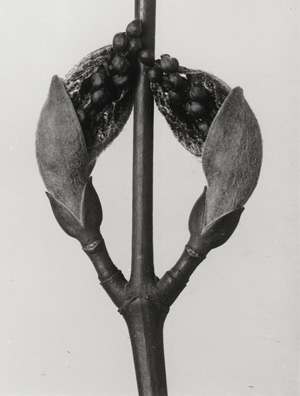
Pflanzenformen (Plant Studies). 1930s. 6 gelatin silver prints, printed in 2010 from the original negatives. Each circa 24,8 x 18,8 cm (30,5 x 24 cm). Each with Griffelkunst edition text printed on the verso. In original half-canvas portfolio with accompanying text brochure.
Karl Blossfeldt's meticulous studies of plants reveal the intricate structures, patterns and geometries found in nature. Originally conceived as teaching material for his students at the Berlin School of Applied Arts, his photographs gained wider recognition with the publication of Urformen der Kunst in 1928. Through close-up views and neutral backgrounds, Blossfeldt transformed botanical specimens into sculptural forms, bridging the fields of photography, art and design. The present portfolio was published by Griffelkunst in 2010, using the original negatives.
Borchert, Christian
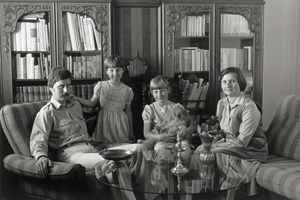
Porträt Familie M. (Dipl.-Ing für Elektrotechnik; Ökonom), Cottbus
Los 4116
Schätzung
600€ (US$ 690)
Porträt Familie M. (Dipl.-Ing für Elektrotechnik; Ökonom), Cottbus 1983. Vintage gelatin silver print. 12,8 x 17,9 cm. Titled and dated by the photographer in pencil and with photographer's stamp on the verso.
This photograph belongs to Christian Borchert's extensive long-term project “Familienporträts” (Family Portraits), which captured diverse social environments in East Germany between the 1970s-1990s. Distancing himself from official state propaganda, Borchert focused on the subtle reality of domestic life, using precise compositions and natural lighting to reveal the unique social status, personal taste, and psychological dynamics of each family within their private spaces.
Literatur: Gosbert Adler and Wilmar Koenig, eds. DDR Foto: Freunde der Werkstatt für Fotografie, Berlin: Heenemann, 1985, ill. p. 50.
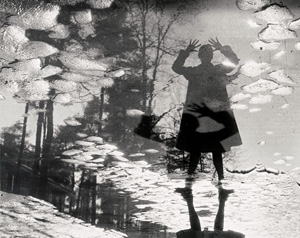
Spiegelung; Gestrüpp. 1936, 1949. 2 gelatin silver prints, printed later. Each circa 24 x 29,8 cm. Each signed, titled and dated by the photographer in ballpoint pen, with photographer's Hofgeismar stamp on the verso.
Fritz Brill studied commercial graphic design at the Kunstgewerbeschule in Berlin and attended Johannes Itten's school, where he developed an interest in photography. After working as a graphic designer in Herbert Bayer's studio, he increasingly turned to photography as of 1932 but his career was interrupted by World War II. Following the war, he settled in Hofgeismar, near Kassel, where he resumed his photographic work and held his first post-war exhibition in 1949. In the early 1950s, he established the "Institut für Photoanalyse" in Hofgeismar together with his wife Hedwig. Alongside his photographic work, he produced documentary films and remained active in industrial and advertising photography.
Brill, Fritz
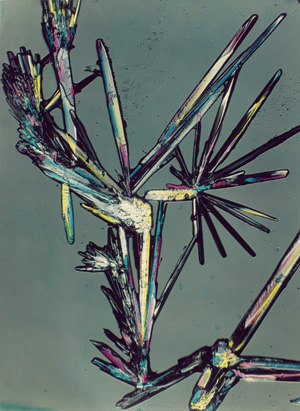
Organic salt structure; Synthetic penicillin (micro photographs)
Los 4118
Schätzung
500€ (US$ 575)
Organic salt structure; Synthetic penicillin (micro photographs).1952/1956. 2 vintage chromogenic prints. 23 x 17 cm and 21,5 x 26,3 cm. Each mounted to board, signed by the photographer in pencil below the image on the mount; each signed and dated by the photographer in ballpoint pen as well as photographer's Hofgeismar stamp, and 1 with typed label on the verso.
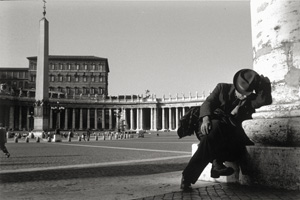
Petersplatz mit Obelisk. 1962. Gelatin silver print, printed later. 24,3 x 36,6 cm (sheet 30,5 x 40,4 cm). Signed, titled and dated by the photographer in pencil, as well as photographer's copyright stamp on the verso.
Active for over five decades in the field of photography as a freelance photojournalist, documentary filmmaker and cameraman, Norbert Bunge was also a tireless advocate for the work of overlooked and historically significant photographers. Through his Berlin gallery, he curated numerous exhibitions, with a particular focus on socially engaged photography and the visual culture of East Germany. His own photographs were published in such magazines as Spiegel, Quick and Merian.
Literatur: Mathias Bertram (ed.). Norbert Bunge. Fotografien. Leipzig: Lehmstadt, 2017, ill. pp. 24-25.
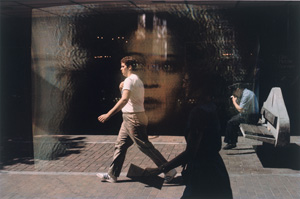
Providence. 1984. Dye transfer print, printed 1980s. 24,4 x 36,7 cm (sheet 44 x 55,5 cm). Unsigned, with printer's stamp on the verso.
Harry Callahan’s color photographs, produced in the later years of his career, are widely celebrated for their vivid, introspective, and often abstract qualities. Exploring a wide range of subjects - from landscapes and cityscapes to portraiture - Callahan used color to add a new dimension of depth and emotional resonance, further enriching his already distinguished body of work. A print of this image is in the collection of MoMA, New York.
Literatur: Keith F. Davis. Harry Callahan: New Color Photographs 1978-1987. Kansas City: Hallmark Cards, Inc., 1988, ill. p. 104.
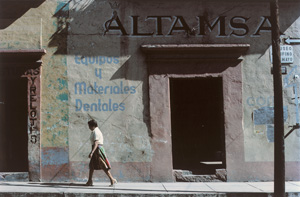
Mexico. 1982. Dye transfer print, printed later. 24,4 x 36,7 cm (sheet 44,5 x 56,8 cm). Unsigned.
Literatur: Dirk Luckow and Sabine Schnakenberg, eds. Harry Callahan (exhibition catalog). Heidelberg: Kehrer, 2013, ill. p. 212.
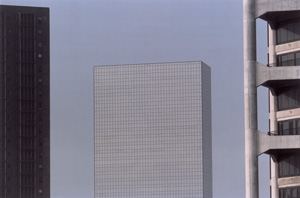
Untitled. 1970s-1980s. Dye transfer print, printed later. 24,4 x 36,7 cm (sheet 44,5 x 56,8 cm). Unsigned.
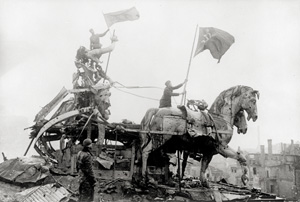
Chaldej, Jewgeni
Atop the Brandenburg Gate, Berlin, April 1945
Los 4123
Schätzung
2.500€ (US$ 2,874)
Atop the Brandenburg Gate, Berlin, April 1945. 3 gelatin silver prints forming a panoramic view, printed 1990s. Each ca. 30,2 x 40,5 cm. 2 signed by the photographer in pencil on the verso.
Jewgeni Chaldej, a Soviet photojournalist, is renowned for his photographs documenting the capture of Berlin by Soviet troops on May 2, 1945, marking the end of World War II in Europe. His images, particularly the iconic scene of the Soviet flag being raised on the Reichstag building, have become crucial visual records of this historic moment. This more unusual panoramic format of the image Atop the Brandenburg Gate gives a sweeping view including Pariser Platz and the famous Adlon Hotel, all in a state of ruin at the end of World War II.
Literatur: Ernst Volland and Heinz Krimmer, eds. Von Moskau nach Berlin. Bilder des russischen Fotografen Jewgeni Chaldej. Berlin: Parthas, 1999, ill. p. 72 (variant).
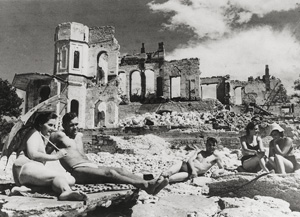
Sevastopol, May 1944. Gelatin silver print, printed 1990s. 26 x 40 cm (sheet 30,3 x 40,3 cm). Signed by the photographer and annotated in another hand in pencil on the verso.
In this more hopeful image of WWII, Chaldej captured a group of sunbathers resting among the war ruins of Sevastopol.
Literatur: Ernst Volland and Heinz Krimmer, eds. Von Moskau nach Berlin. Bilder des russischen Fotografen Jewgeni Chaldej. Berlin: Parthas, 1999, ill. pp. 34-35.
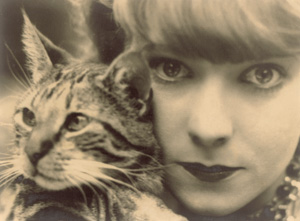
Woman and cat. 1930s. Vintage sepia toned gelatin silver print, mounted to original board. 17,5 x 23,5 cm (mount 22,5 x 26 cm). Signed by the photographer in pencil in lower right corner on the mount.
Born into a wealthy Jewish family in Berlin, Hans Casparius initially pursued acting rather than joining his family's textile business. He appeared in minor roles in silent films, working with directors such as G.W. Pabst, who encouraged him to take up photography on film sets. Casparius subsequently established himself as a professional photographer, producing production stills for films such as The Threepenny Opera, Pandora's Box and Diary of a Lost Girl. He was also active as a photojournalist, capturing numerous street scenes that vividly document everyday life and the atmosphere of Berlin during the interwar period.
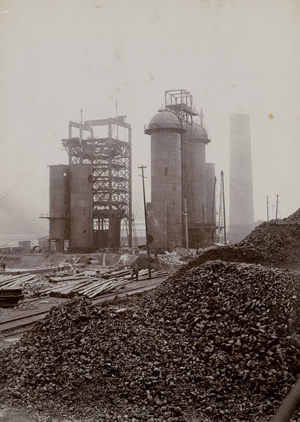
China
Documentation of the construction of the first German iron and steel factory (Dingler AG) in Hankow-Hanjang (Wuhan), China
Los 4126
Schätzung
2.000€ (US$ 2,299)
Photographer unknown. Documentation of the construction of the first Chinese iron and steel factory in Hankow-Hanjang (Wuhan), China under the supervision of the German company Dingler AG. 1906-09. 12 collodion paper and 5 gelatin silver prints. Most circa 21 x 28 cm, some smaller. 1 mounted to original studio board, some annotated and dated in German in ink on the verso.
An extensive collection documenting the construction of an early Chinese iron and steel works under the supervision of the German company Dingler AG. The photographs show various stages of construction, including unfinished blast furnaces, the interior of the central steam engine building and a general view of the foundations with three Chinese architects and the German construction manager on site. The collection also includes a view of Hankow harbor, offering further insight into the industrial development of the region in the early 20th century.
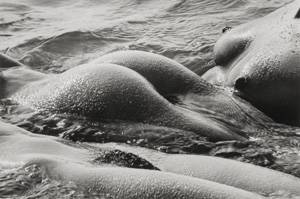
Les Géantes, Camargue, France. 1978. Gelatin silver print, printed 1980s. 18 x 27 cm (sheet 23,8 x 29,5 cm). Photographer's/copyright stamp and numbers in pencil on the verso.
Lucien Clergue is particularly renowned for his artistic nude photography, often depicting female figures against the natural landscapes of the Camargue. By positioning his subjects in water or on sandy beaches, he explored the interplay of light, shadow and reflections, emphasising the sculptural qualities of the human form.
Design / German Gas Stations
Presentation album of Die BV Grosstankstellen von RK Mannheim
Los 4128
Schätzung
750€ (US$ 862)
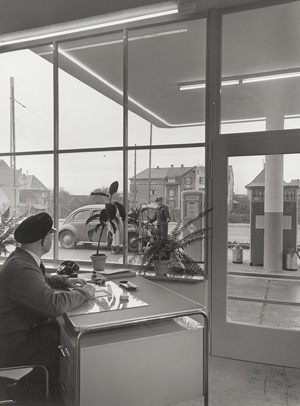
Die BV-Großtankstellen von RK Mannheim im Jahre 1952. Presentation album documenting petrol stations in southwestern Germany, dedicated to Director Hörning. 1950s. 57 vintage gelatin silver prints (42 ferrotyped), all on various Agfa papers. Inserted in photo corners or mounted with photo stickers to album pages. Various sizes between circa 8 x 13 cm and 17 x 23,5 cm. Many with stamps of various photographic studios and some with numbers in ink on the verso. All captioned in ink below the images on the album pages. Bound in original half-leather album with gilt-lettered inscription "Raab Karcher G.m.b.H. Mannheim".
This collection features striking contemporary photographs showing the iconic mid-century architecture of regional gas stations, sleek vintage Aral fuel pumps, and the burgeoning car culture along the vital transit routes connecting Darmstadt, Mannheim, Heidelberg, and Kaiserslautern. The images beautifully capture the architectural aesthetics of the era - characterized by sweeping cantilevered roofs and vibrant neon lighting - while offering detailed views of station facades and car care bays. Beyond the exterior design of the stations, the album provides a rare socio-historical glimpse into daily life, mobility, and the rapid Americanization of the Rhine-Main-Neckar region. This is highlighted by scenes featuring gas station attendants at work, alongside customer rest areas set against typically West German mid-century interiors. Defined by their functional clarity, these photographs represent a comprehensive documentation of transport history, mid-century modern design, and regional German topographics.
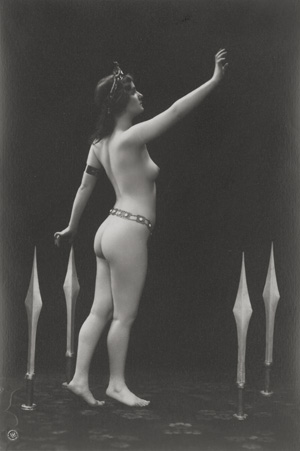
Photographer: Otto Skowraneck (1865-1944). Olga Desmond: Schwertertanz. (Olga Desmond´s Sword Dance). 1908. Original half-cloth folding portfolio with introduction text by Max Thielert and 11 vintage gelatin silver prints (each ca. 22 x 14,5 cm). NPG publisher's logo in lower left. Each mounted to loose boards of the "Neue Photographische Gesellschaft A. G., Steglitz-Berlin" (35,8 x 24,7 cm).
Olga Desmond, known as “Prussia’s Nude Venus,” was a Berlin dancer and actress who gained notoriety for her pioneering nude performances. In 1907, she and Karl Vanselow established the “Berlin Beauty Evenings,” in which tableaux vivants inspired by classical antiquity were recreated, often with performers appearing nude or covered only in body paint. In 1909, her performances at Berlin’s Wintergarten were banned by the police, causing a scandal that even reached the Prussian Landtag. Desmond later performed across Europe and pursued a career in film and theater. As her style of statuary dance was eclipsed by modern expressive dance in the late 1920s, her career declined; after 1933, she lived in poverty and worked as a cleaning woman in Berlin until her death in 1964.
[*]: Regelbesteuert gemäß Auktionsbedingungen. [^]: Ausgleich von Einfuhr-Umsatzsteuer.
* Alle Angaben inkl. 25% Regelaufgeld ohne MwSt. und ohne Gewähr – Irrtum vorbehalten.
Galerie Bassenge
Erdener Str. 5A
14193 Berlin
Öffnungszeiten:
Montag bis Donnerstag, 10–18 Uhr,
Freitag, 10–16 Uhr
Telefon: +49 30 8938029-0
Fax: +49 30 8918025
E-Mail: info (at) bassenge.com
Impressum
Datenschutzerklärung
© 2026 Galerie Gerda Bassenge
Galerie Bassenge
Erdener Str. 5A
14193 Berlin
Öffnungszeiten:
Montag bis Donnerstag, 10–18 Uhr,
Freitag, 10–16 Uhr
Telefon: +49 30 8938029-0
Fax: +49 30 8918025
E-Mail: info (at) bassenge.com
Impressum
Datenschutzerklärung
© 2026 Galerie Gerda Bassenge