
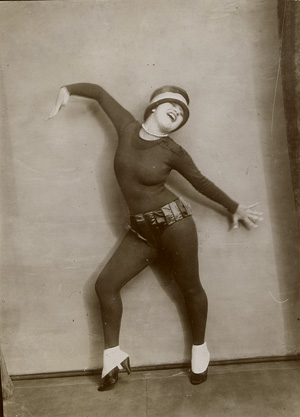
Gert, Valeska
The dancer and performance artist Valeska Gert
Los 4160
Schätzung
600€ (US$ 690)
Photographer: Atelier Binder (active circa 1913-1938). The dancer and performance artist Valeska Gert (1892-1978). 1927. Vintage gelatin silver print. 18,4 x 13 cm. Atlantic agency label with typed press text affixed to the verso.
The photograph depicts the pioneering German Expressionist dancer and cabaret artist Valeska Gert performing a provocative solo dance from circa 1927, historically known as "Negertanz", a title now considered offensive due to its racial connotations. Dressed in a close-fitting black costume, black shoes with white spats and a black hat with white trim, Gert challenged traditional conventions of dance through exaggerated gestures, unconventional movements and theatrical expression. Her radical and often satirical performances established her as one of the most distinctive figures of the Weimar Republic's avant-garde theatre and dance scene.
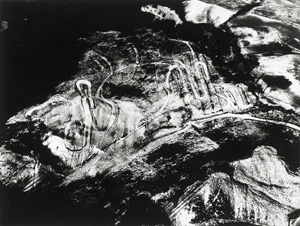
Untitled (from the series "Metamorfosi della terra"). 1970s. Vintage gelatin silver print on Agfa paper. 30,2 x 40,2 cm. Photographer's copyright stamp "Mario Giacomelli via Mastai 24 Senigallia" and annotations in pencil on the verso.
Part of Mario Giacomelli's Metamorfosi della terra (Metamorphosis of the Land) series, the present photograph exemplifies his distinctive approach to landscape photography, characterized by graphic abstraction, strong contrasts and an intensely personal engagement with nature. Photographed from an elevated perspective, the ploughed fields and furrowed earth are transformed into almost calligraphic compositions, blurring the boundaries between photography and abstract art. As in his later series Presa di coscienza sulla natura, Giacomelli explored the traces left by human intervention on the landscape, reflecting his concern with the transformation and degradation of the natural environment.

Self-Portrait on the Train, Germany. 1992. Chromogenic print. 39,8 × 50,5 cm. Signed, titled, editioned “A.P. 2” and dedicated “Fröhliches Weihnachten für Herr und Frau Remy, with love x” in felt-tip pen on the verso.
Nan Goldin is renowned for her deeply personal and intimate photographic narratives exploring themes of love, identity, sexuality and human relationships. Her seminal work The Ballad of Sexual Dependency (1986) documents her circle of friends and the underground subcultures of New York during the 1970s and 1980s, characterised by a spontaneous snapshot aesthetic and expressive use of colour. Her photographs frequently capture private, unguarded moments, blurring the boundaries between documentary photography and autobiography. The present self-portrait, taken during a train journey through Germany, exemplifies her introspective approach, turning the camera on herself as part of her ongoing exploration of personal experience.
Literatur: Walter Keller and Hans Werner Holzwarth, eds. A Double Life: Nan Goldin/David Armstrong. Scalo, New York ,1994, ill. p. 18.
Nan Goldin: I’ll Be Your Mirror, exh. cat. Whitney Museum of American Art, New York, Scalo, Zurich, 1996, cover and ill. pp. 350-351.
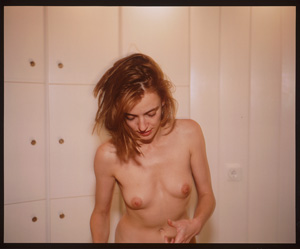
Amanda in the Locker Room, Berlin. 1993. Cibachrome print, printed 1990s. 51 x 61 cm. Signed and titled by the photographer in black marker on the verso.
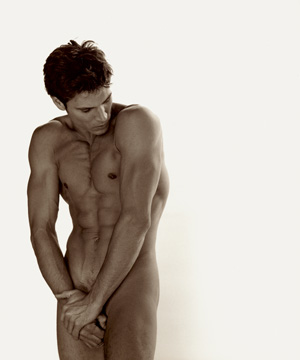
Male nudes. 1990s. 2 vintage gelatin silver prints. 17,6 x 12,2 cm and 24,3 x 19,7 cm (sheet 25,3 x 20,5 cm). One monogrammed by the photographer in felt-tip pen in the lower margin and with copyright notation in pencil on the verso; the other signed and numbered "5/100" by the photographer in pencil on the verso.
Best known for his striking black-and-white portraits of celebrities, artists and cultural figures, Greg Gorman has developed a distinctive photographic style characterized by dramatic lighting, strong contrasts and carefully composed images. Alongside his Hollywood portraiture, he has devoted a significant part of his artistic practice to the male nude, exploring the sculptural qualities of the human body through an interplay of light and shadow. His photographs combine a refined sense of intimacy and sensuality with a formal elegance that bridges commercial and fine art photography.
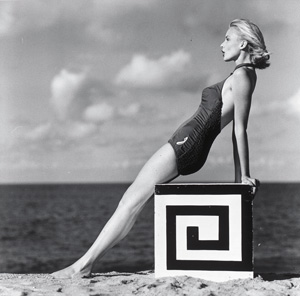
Gundlach, F.C.
Christa Vogel im Goldfisch Badeanzug, Sylt
Los 4165
Schätzung
1.500€ (US$ 1,724)
Christa Vogel im Goldfisch Badeanzug, Sylt. 1958. Gelatin silver print, printed later. 30,5 x 30,8 cm (50,7 x 40,7 cm). Signed, titled, dated and dedicated by the photographer in pencil as well as photographer's stamp on the verso.
F.C. Gundlach was one of Germany's most influential fashion photographers, whose work helped shape the visual identity of post-war fashion and lifestyle photography. Particularly active from the 1950s onwards, he became renowned for his elegant compositions, innovative staging and use of unconventional locations, often taking fashion photography beyond the traditional studio setting.
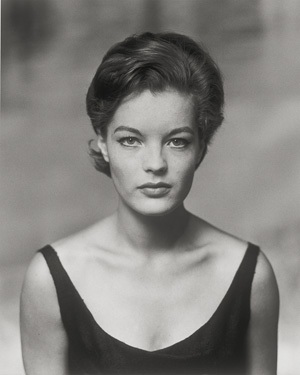
Romy Schneider, Hamburg. 1961. Gelatin silver print, printed later. 40 x 30 cm (40,7 x 50,5 cm). Signed, titled, dated and dedicated by the photographer in pencil on the verso.
Literatur: Klaus Honnef and Hans-Michael Koetzle (eds.). F.C. Gundlach: Das fotografische Werk. Steidl 2008, ill. p. 35.
Beate Kemfert (ed.). Die Erinnerung ist oft das Schönste: Fotografische Porträts von Romy Schneider. Mit Fotografien von Herbert List, Max Scheler, Roger Fritz, F. C. Gundlach, Will McBride, Peter Brüchmann, Werner Bokelberg, Helga Kneidl, Robert Lebeck. Ostfildern 2008, ill. p 58.
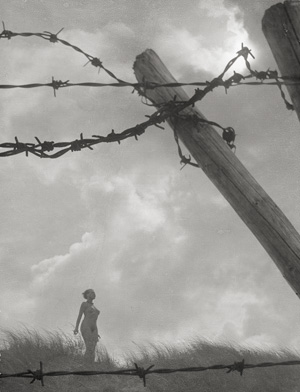
Female nude in the dunes. 1952. Vintage large-format ferrotyped gelatin silver print. 38,4 x 29,3 cm. Signed and dated by the photographer in ink and pencil as well as photographer's "Wasserburg/Bodensee" stamp on the verso.
Active during the early to mid-20th century, German photographer Heinz Hajek-Halke was a true innovator, known for his imaginative and surreal compositions. His work often incorporated multiple exposures, photomontage, and innovative darkroom techniques to create visually striking and thought-provoking images. He explored themes of abstraction, motion, and the intersection of reality and dreams, pushing the boundaries of traditional photography.
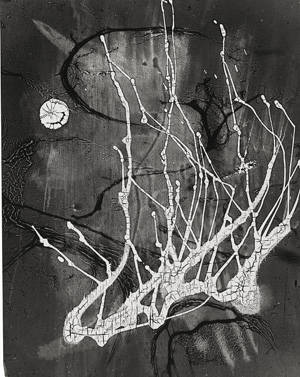
Verknöcherte Lyrik (Lichtgraphik).Ca. 1961. Vintage ferrotyped gelatin silver print on Agfa-Brovira paper. 29 x 22,7 cm (sheet 30,2 x 23,8 cm). Signed by the photographer in black felt-tip pen and "HHH" inventory stamp with number in pencil on the verso.
Literatur: Michael Ruetz and Rolf Sachsse, eds. Heinz Hajek-Halke. Der Alchemist. Göttingen: Steidl 2012, ill. p. 135.
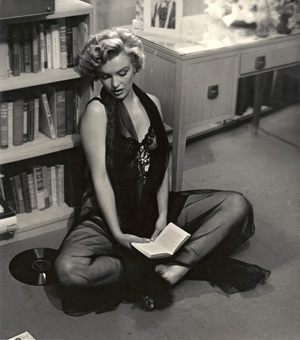
Marilyn Monroe reading. 1952. Gelatin silver print, printed 1981. 43 x 35,5 cm. Photographer's/copyright stamp on the verso.
The Latvian-born American photographer Philippe Halsman became one of the most prominent and innovative portraitists of the 20th century. He captured some of the era's most iconic faces and transformed celebrity photography through wit, dynamic movement, and deep psychological insight. Over his prolific career, Halsman produced an unmatched record of 101 cover photos for Life magazine. He photographed Marilyn Monroe several times and helped promote her career with his iconic 1952 Life cover of her.
Literatur: Jane Halsman Bello and Steve Bello, eds. Philippe Halsman. Eine Retrospektive. Zurich: Stemmle, 1998, ill. unpaginated (from the same sitting).
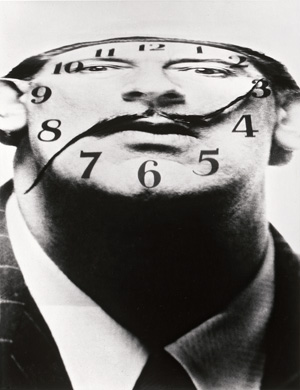
Dali Clockface. 1953. Gelatin silver print, printed 1981. 35,2 x 27,7 cm. With "Halsman/Dali" edition stamp, therein editioned "148/250" in ink on the verso.
In 1941 Philippe Halsman began a legendary 37-year creative partnership with Surrealist master Salvador Dalí. Together, they conceptualized mind-bending photographs. Their most famous collaboration, Dalí Atomicus (1948), features Dalí suspended mid-air alongside flying cats, a stream of thrown water, an easel, and a chair - an unretouched work that required 28 takes to perfectly execute. They also co-created the iconic skull-like body collage In Voluptas Mors and published the book Dalí's Mustache (1954).
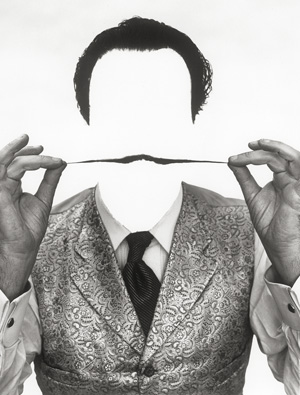
Invisible Dali. 1954. Gelatin silver print, printed 1981. 35,2 x 27,7 cm. With "Halsman/Dali" edition stamp, therein editioned "148/250" in ink on the verso.
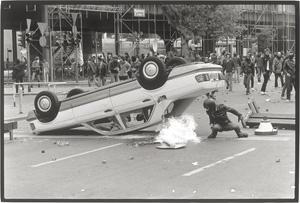
Anti-Reagan Demo, Berlin. June 11, 1982. Gelatin silver print, printed later. 25 x 36 cm (sheet 30,4 x 40,3 cm). Photographer's/copyright stamp as well as signed and dated by the photographer in pencil on the verso.
Literatur: Ernst Volland (ed.). Gefühl und Schärfe. Fotos für die TAZ. Berlin: Rixdorfer Verlangsanstalt, 1987, ill. pp.22-23.
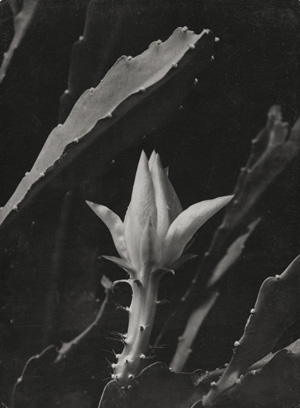
Phyllocactus bud. 1930s. Vintage ferrotyped gelatin silver print. 22,7 x 16,7 cm. Max Gerlach agency label and typed label with press text on the verso.
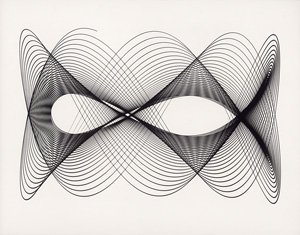
Rhythmograms. 1950s. 4 vintage gelatin silver prints (3 ferrotyped, 1 on Agfa and 1 on Agfa-Portriga-Rapid paper). 3 circa 24 x 18 cm and one 23,8 x 30,2 cm. Each signed by the photographer in pencil with photographer's stamp with archive number in pencil on the verso.
The German photographer Heinrich Heidersberger is best known for his architectural and industrial images, which helped shape the visual language of postwar modernism in West Germany. His work is characterized by precise, graphic compositions and a strong sense of form, while his experimental pieces - most notably his abstract “rhythmograms”, such as the ones offered here - reveal a parallel interest in movement and light.
[*]: Regelbesteuert gemäß Auktionsbedingungen. [^]: Ausgleich von Einfuhr-Umsatzsteuer.
* Alle Angaben inkl. 25% Regelaufgeld ohne MwSt. und ohne Gewähr – Irrtum vorbehalten.
Galerie Bassenge
Erdener Str. 5A
14193 Berlin
Öffnungszeiten:
Montag bis Donnerstag, 10–18 Uhr,
Freitag, 10–16 Uhr
Telefon: +49 30 8938029-0
Fax: +49 30 8918025
E-Mail: info (at) bassenge.com
Impressum
Datenschutzerklärung
© 2026 Galerie Gerda Bassenge
Galerie Bassenge
Erdener Str. 5A
14193 Berlin
Öffnungszeiten:
Montag bis Donnerstag, 10–18 Uhr,
Freitag, 10–16 Uhr
Telefon: +49 30 8938029-0
Fax: +49 30 8918025
E-Mail: info (at) bassenge.com
Impressum
Datenschutzerklärung
© 2026 Galerie Gerda Bassenge