
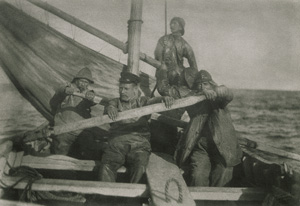
Fishermen at sea. Ca. 1910. Vintage carbon print. 26,5 x 38,5 cm. Photographer's blind stamp in the lower right corner.
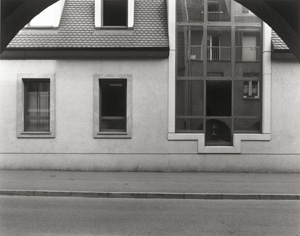
Images from the series "Irgendwo". 2001-2004. 3 vintage gelatin silver prints. Each ca. 17 x 21,5 cm (sheet 23,5 x 30 cm). One signed and dedicated in black felt-tip pen in the lower margin; each signed and annotated by the photographer in pencil on the verso.
Michael Schmidt was a leading figure in German documentary photography, known for his restrained and perceptive studies of urban life and the built environment. In 1976, he founded the "Werkstatt für Photographie" in Berlin-Kreuzberg, an important forum for contemporary photography. His sustained engagement with Berlin's postwar urban landscape established him as one of the most influential German photographers of his generation. In his series "Irgendwo", he turned his attention beyond Berlin to everyday life and places across Germany. Beigegeben: A copy of the book Michael Schmidt. Irgendwo. Cologne: Snoeck, 2005. Signed, dedicated and with drawing by M. Schmidt in pencil on title page. - Spine of dust jacket slightly time-stained, otherwise in very good condition.
Literatur: Michael Schmidt. Irgendwo. Cologne: Snoeck, 2005, ill. pp. 15, 99 and 111.
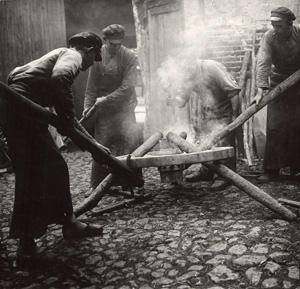
Metal workers. Mid-1930s. Vintage ferrotyped gelatin silver print. 16,8 x 17,5 cm. Photographer's stamp, archive stamps and typed paper label on the verso.
Eberhard Schrammen was among the first students at the Bauhaus in 1919, initially studying architecture. That year, he published the first issue of the Bauhaus magazine Der Austausch, featuring his own woodcuts. From 1921, he studied under Lyonel Feininger in the print workshop and attended Lothar Schreyer's stage design workshop. After the Bauhaus relocated to Dessau, Schrammen moved to the Gildenhall artists' colony, where he established a woodcraft workshop and joined the Deutscher Werkbund. He closed the workshop following the onset of the Great Depression in 1929 and turned to photography. After moving to Lübeck-Siems in 1933, he produced photographic series for Mauritius-Verlag and Lindenverlag, including the work represented by this photograph.
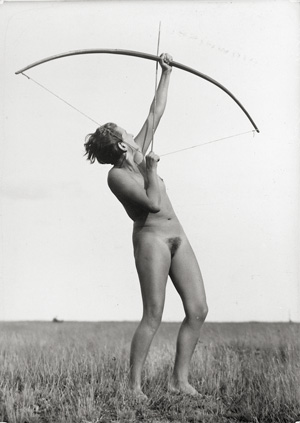
Ilka Dieball as "Diana". Ca. 1928. Vintage ferrotyped gelatin silver print. 18,2 x 12,9 cm. Photographer's "Kaiserplatz 16" stamp on the verso.
Published several times in physical education magazines of the period, this portrait depicts Ilka Dieball, a dance and gymnastics teacher and the first wife of naturism pioneer Adolf Koch (1897-1970). Together with Koch and Hans Graaz, she helped direct his Berlin school of physical culture. Following the National Socialist crackdown on the nudist movement in 1933, the school and its grounds were confiscated, Koch's books were burned and he was prohibited from teaching. In 1935, he established an institute in Kreuzberg, where the work continued on a smaller scale; Dieball later ran it during his wartime absence. As Ilka Falkenhagen, she taught gymnastics at the Spandau adult education centre into old age.
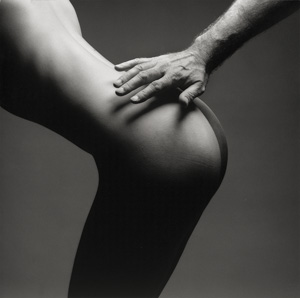
Hommage à Brancusi, Paris. 1969. Gelatin silver print, printed 1979. 30 x 30,3 cm (sheet 39,8 x 30,3 cm). Signed and dated by the photographer in pencil and photographer's stamp on the verso.
Jeanloup Sieff studied photography in Paris and Vevey before beginning his career as a freelance photojournalist. He joined Magnum in 1958 and later worked in New York for magazines including Esquire, Glamour, Vogue and Harper's Bazaar. His wide-ranging work encompassed fashion, portraiture, reportage, landscapes and nudes, distinguished by an elegant, often sensuous approach to form. Hommage à Brancusi reflects his interest in the sculptural qualities of the human body.
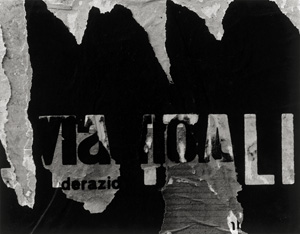
Rome 49. 1963. Gelatin silver print, printed later. 25 x 31,6 cm (sheet 27,5 x 35,3 cm). Signed by the photographer in ink in the lower margin; titled, dated and signed by the photographer, and numbered in pencil on the verso.
The American photographer Aaron Siskind developed a distinctive approach to abstraction that brought photography into dialogue with mid-century Abstract Expressionist painting. Turning his camera towards peeling paint, weathered posters and cracks in asphalt, he transformed details of the material world into flat, expressive compositions.
Provenienz: Allan Porter Collection
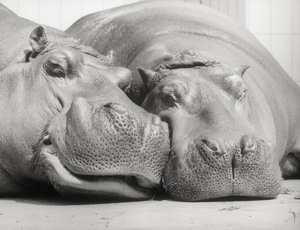
Flusspferde, Zoo Wilhelma, Stuttgart. 1989. Vintage ferrotyped gelatin silver print on Agfa paper. 30,8 x 40 cm. Photographer's stamp on the verso.
Walter Sittig was an internationally renowned animal photographer with a keen eye for decisive and unexpected moments. His photographs were widely published in magazines and newspapers across 36 countries, including German titles such as Stern, Quick, Die Welt and Frankfurter Rundschau.
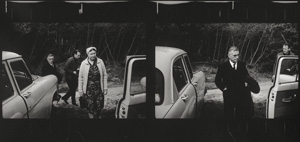
Sutkus, Antanas
Jean Paul Sartre and Simone de Beauvoir, Lithuania
Los 4242
Schätzung
600€ (US$ 690)
Jean-Paul Sartre and Simone de Beauvoir, Lithuania. 1965. 3 vintage large-format matte gelatin silver prints. 2 ca. 28 x 50 cm and 1 print 38 x 50,3 cm. Each signed, titled and dated by the photographer in pencil on the verso.
A leading figure in Lithuanian photography, Antanas Sutkus is known for his poetic black-and-white images of everyday life, often recalling the rural world of his youth. In 1969, he co-founded the Lithuanian Society of Art Photography. These photographs belong to his celebrated series documenting Jean-Paul Sartre and Simone de Beauvoir during their visit to Lithuania in 1965.
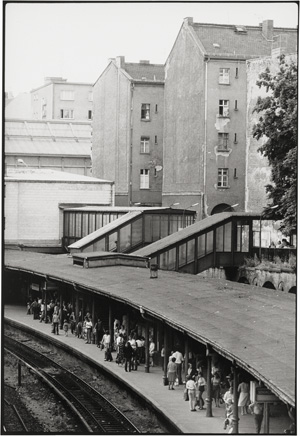
S-Bahnhof Schönhauser Allee. 1980. Vintage gelatin silver print. 22,2 x 15,1 cm (sheet 23,8 x 18,2 cm). Photographer's stamp and annotated in pencil on the verso.
Uwe Steinberg was a significant representative of social documentary photography in the German Democratic Republic. Distancing his work from official state imagery, he focused on everyday life in East Berlin. Made as part of a long-term study of Schönhauser Allee, this photograph depicts its S-Bahn station, a central transit point in the Prenzlauer Berg district.
Literatur: Norbert Bunge and Norbert Moos, eds. Uwe Steinberg: Berlin. Leipzig: Lehmstedt, 2023, ill. p. 43.
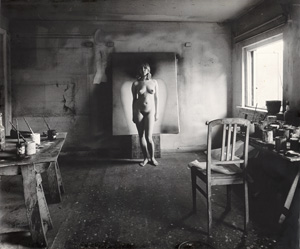
Jutta stehend im Atelier. 1967. Vintage large-format gelatin silver print. 50 x 59,8 cm. Signed and inscribed "e.a." by the photographer in pencil in the lower left corner; signed, titled and dated by the photographer and photographer's copyright stamp on the verso.
Karin Székessy is best known for her poetic nude studies and staged compositions that blend surrealism, symbolism, and sculptural form. Beginning in the 1960s, she developed a distinctive visual language marked by dreamlike interiors, symbolic props, and an introspective treatment of the female body. Often working in natural light and using long exposures, Székessy’s photographs evoke the stillness of Old Master paintings while challenging conventional representations of femininity. Her work occupies a unique place in postwar European photography, bridging fine art, fashion, and surrealist traditions.
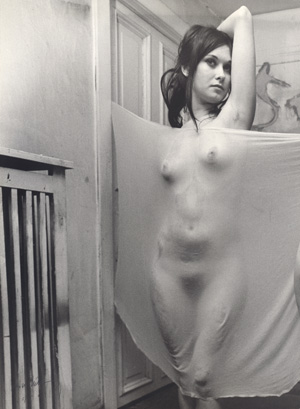
Joanna verschleiert. 1968. Vintage large-format gelatin silver print. 58,2 x 42,7 cm. Signed and editioned "3/15" by the photographer in pencil in the lower left corner; signed, titled and dated by the photographer in pencil and 2 photographer's copyright stamps on the verso.
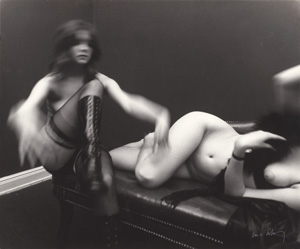
Striptease. 1971. Vintage large-format gelatin silver print. 49,7 x 60 cm. Signed by the photographer in white crayon in the lower right; signed, titled and dated by the photographer in pencil and photographer's copyright stamp on the verso.
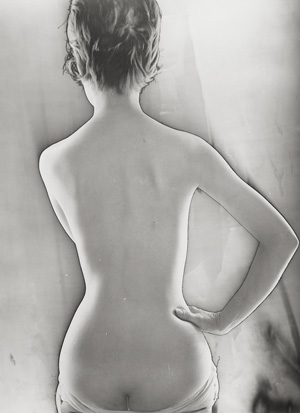
Nu de dos (solarization). 1929/30. Gelatin silver print, printed later by Pierre Gassmann. 28,3 x 20,7 cm (sheet 30,4 x 23,8 cm). Photographer's stamp, numbers in pencil and "Tirage Original réalisé par Pierre Gassmann" stamp on the verso.
The French photographer Maurice Tabard was a leading figure in Surrealist photography. Influenced by his friend Man Ray, he explored techniques including solarization, superimposition and photomontage, transforming familiar subjects into enigmatic images.
Tairraz II, Georges
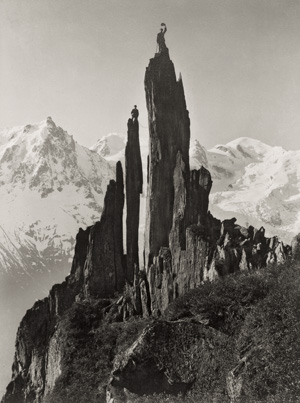
Two mountaineers on the summit of a pinnacle, Mont Blanc Massif
Los 4248
Schätzung
750€ (US$ 862)
Two mountaineers on the summit of a pinnacle, Mont Blanc Massif. 1950. Vintage gelatin silver print on Kodak paper. 23,8 x 17,8 cm (sheet 29 x 23 cm). Photographer's stamp on the verso.
The Tairraz family of Chamonix established a remarkable tradition of Alpine photography spanning several generations. In 1857, Joseph Tairraz began making daguerreotypes and established a studio offering souvenir portraits and mountain views to tourists and mountaineers. His son Georges I trained with Pierre Petit in Paris before taking over the family studio around 1890. Georges II carried this legacy into the 20th century, combining photography and mountaineering in his images of the Mont Blanc Massif and its climbers.
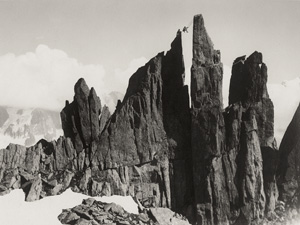
Climbers, Mont Blanc Massif. 1950. Vintage gelatin silver print on Kodak paper. 18 x 23,8 cm (sheet 23 x 29 cm). Photographer's stamp on the verso.
[*]: Regelbesteuert gemäß Auktionsbedingungen. [^]: Ausgleich von Einfuhr-Umsatzsteuer.
* Alle Angaben inkl. 25% Regelaufgeld ohne MwSt. und ohne Gewähr – Irrtum vorbehalten.
Galerie Bassenge
Erdener Str. 5A
14193 Berlin
Öffnungszeiten:
Montag bis Donnerstag, 10–18 Uhr,
Freitag, 10–16 Uhr
Telefon: +49 30 8938029-0
Fax: +49 30 8918025
E-Mail: info (at) bassenge.com
Impressum
Datenschutzerklärung
© 2026 Galerie Gerda Bassenge
Galerie Bassenge
Erdener Str. 5A
14193 Berlin
Öffnungszeiten:
Montag bis Donnerstag, 10–18 Uhr,
Freitag, 10–16 Uhr
Telefon: +49 30 8938029-0
Fax: +49 30 8918025
E-Mail: info (at) bassenge.com
Impressum
Datenschutzerklärung
© 2026 Galerie Gerda Bassenge